
Flammability Testing Equipment.
Glow-wire, needle-flame and ball-pressure flammability testing per IEC 60695.
About this category.
Overview
Flammability testing determines how a material or product behaves when exposed to a flame or ignition source — whether it catches fire, how fast flame spreads across it, and whether it self-extinguishes. It is a core part of fire safety for electrical products, vehicle interiors, building materials and many consumer goods.
The aim is to characterise a material's reaction to fire with a repeatable, comparable result, so designers can select materials and manufacturers can prove their products meet the fire-safety requirements of the relevant standard before going to market.
What Flammability Testing Covers
The category spans several ignition and flame-spread checks:
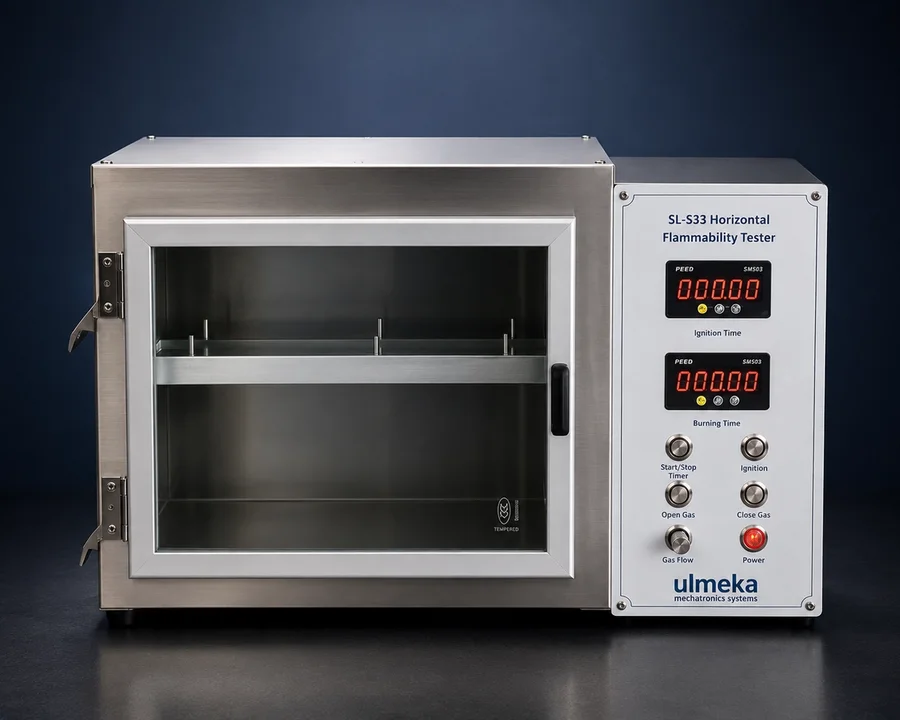
- Flame spread and burn rate — how quickly a flame travels across a specimen held horizontally or vertically, and whether burning stops once the source is removed.
- Localised ignition sources — glow-wire and needle-flame tests reproduce a hot wire or small flame from a faulty component to confirm nearby materials resist ignition.
- Thermal stability — ball-pressure tests confirm that insulating parts hold their shape at elevated temperatures.
Related Standards
Most electrotechnical flammability work is built on the IEC 60695 family of fire-hazard test methods, which covers glow-wire, needle-flame and related checks. Product- and sector-specific standards then reference these methods — for example DIN 75200 for vehicle interior materials — so a single set of apparatus serves a wide range of requirements.
Equipment & Configuration
Flammability testing uses apparatus matched to the ignition source and specimen the standard defines:
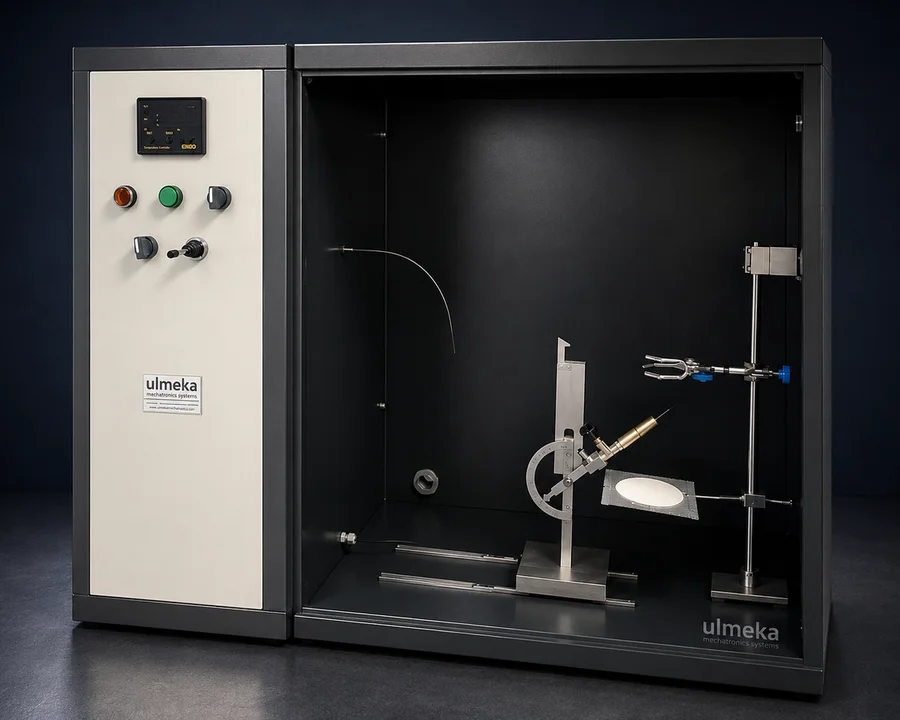
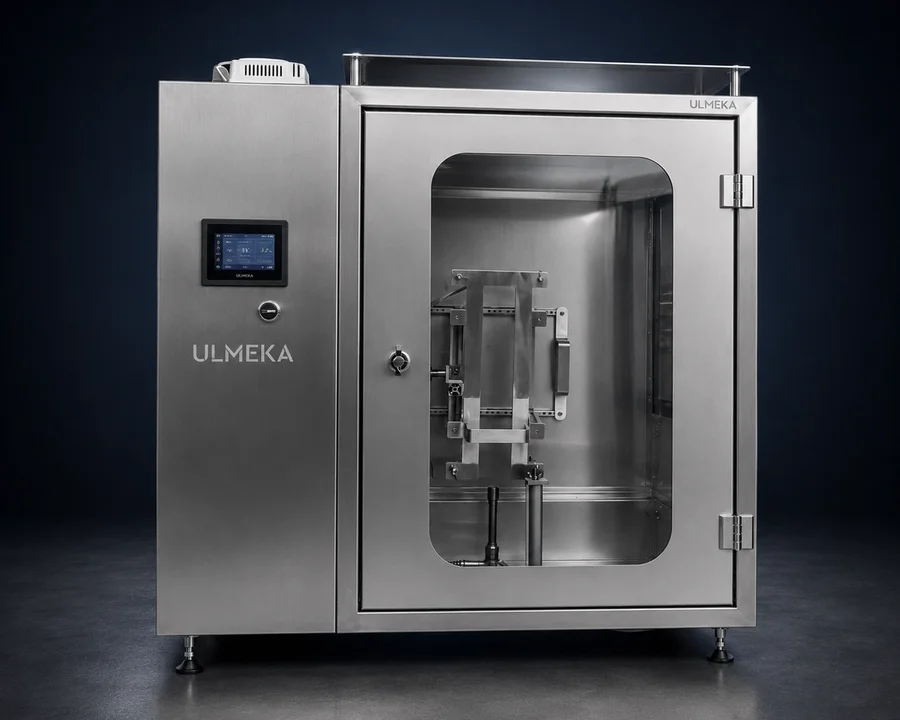
- Burn chambers — horizontal and vertical flame rigs with a defined burner, gas supply and specimen holder, configured to the standard's flame conditions.
- Glow-wire, needle-flame and ball-pressure apparatus — for localised ignition and thermal-stability checks on materials and components.
ULMEKA Flammability Testing Equipment
ULMEKA Mechatronics designs and manufactures flammability test apparatus — burn chambers, glow-wire, needle-flame and ball-pressure rigs — configured to the ignition source and specimen each standard requires. The equipment below covers this category; for a specific testing need, the requirements are confirmed at the proposal stage.
Related standards.
8 units in this category.
ULMEKA engineers test systems
to specification.
If your requirement is outside this catalogue — custom chamber sizes, combined-standard integration, or tailored test profiles — talk to our engineering team.