
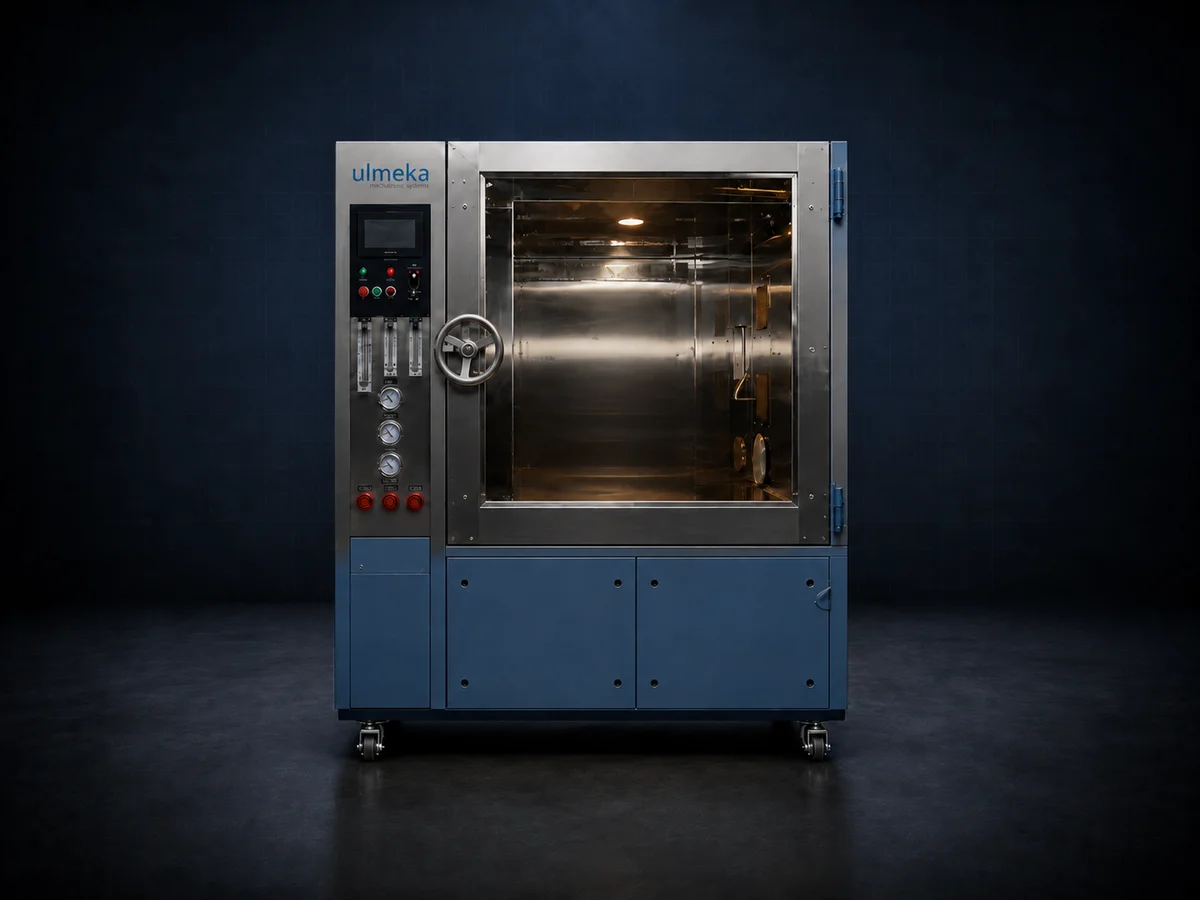
RTCA DO-160.
RTCA DO-160 defines environmental conditions and test procedures for airborne equipment, used in the design and certification of avionics. Categories cover temperature, altitude, vibration, humidity, EMI and other in-flight conditions.
About this standard.
RTCA DO-160 is the international standard that defines environmental conditions and test procedures for airborne equipment installed on commercial and general-aviation aircraft. Developed by RTCA (originally the Radio Technical Commission for Aeronautics, now an aviation standards body) and harmonised internationally as EUROCAE ED-14, the standard is the de facto qualification framework for avionics, cabin systems, sensors and any electronic equipment carried on an aircraft. The current version is DO-160G.
RTCA DO-160 is the avionics environmental qualification standard. For each of the environmental stresses an aircraft component encounters — temperature, altitude, vibration, humidity, water exposure, fluids, EMC, lightning — the standard defines a corresponding test section. Components qualified to DO-160 against the applicable sections can be installed without additional aircraft-level environmental qualification.
Scope
DO-160 applies to electronic and electromechanical equipment intended for installation on aircraft. It is referenced by airworthiness authorities (FAA, EASA and equivalents) as an acceptable means of compliance for environmental qualification of avionics. The standard does not specify which equipment must be tested to which sections — that selection is determined by the equipment installation location, the aircraft category and the relevant certification basis.
The standard is structured into 26 sections, each addressing one environmental stress or category. Equipment is qualified to a specific severity category within each applicable section, recorded on the manufacturer's qualification statement.
Section overview
This page describes the sections most commonly invoked for environmental qualification.
Section 4 — Temperature and altitude
- Purpose: Verify equipment operation under combined temperature and altitude conditions encountered in normal flight, equipment compartment heating loss and rapid decompression
- Test procedures: Low operating temperature, low storage temperature, high short-time operating temperature, high operating temperature, high ground survival temperature, in-flight loss of cooling, altitude variation, decompression and overpressure
- Application: All airborne equipment; Section 4 categorisation is one of the most common DO-160 references
Section 5 — Temperature variation
- Purpose: Test equipment under rapid temperature changes that may occur during ascent, descent and altitude excursions
- Test procedures: Defined ramp rates between low and high temperatures over multiple cycles
Section 6 — Humidity
- Purpose: Evaluate equipment for moisture-related failure modes
- Test severity categories: Standard humidity, severe humidity (extended duration and higher humidity for harsh environments)
- Application: All equipment; particularly important for equipment in unconditioned compartments
Section 7 — Operational shocks and crash safety
- Purpose: Verify equipment performance under operational shocks (e.g. landing, gust loads) and structural integrity under crash safety loads
- Test procedures: Operational shock pulses, crash safety sustained acceleration, crash safety impulse
Section 8 — Vibration
- Purpose: Test equipment under the vibration environment specific to its installation location and aircraft category
- Test types: Sinusoidal vibration, random vibration, sinusoidal on random, helicopter vibration profiles
- Severity categories: Multiple categories matched to aircraft type (jet, turbo-prop, helicopter) and installation location (engine zone, instrument panel, equipment bay)
Section 9 — Explosive atmosphere
- Purpose: Verify that equipment does not ignite a flammable atmosphere through ignition sources such as hot surfaces, sparks or arcs
- Procedure: Equipment operated in a chamber containing a defined fuel-air mixture; ignition of the atmosphere constitutes failure
- Application: Equipment installed in zones where fuel vapour may accumulate (e.g. fuel bay, lavatory in some configurations)
Section 10 — Waterproofness
- Purpose: Test equipment resistance to water exposure consistent with installation location
- Categories: Drip-proof, spray-proof, condensation, continuous stream (depending on category)
- Application: Equipment installed in zones exposed to water leakage, condensation or external water during ground operations
Section 11 — Fluids susceptibility
- Purpose: Demonstrate equipment resistance to chemicals encountered in aircraft operations
- Fluids tested: Hydraulic fluid, fuel, de-icing fluid, cleaning agents, fire extinguishing agents (selection depends on equipment location)
- Application: Equipment installed in zones where fluid contact is possible
Section 12 — Sand and dust
- Purpose: Test equipment performance in environments with airborne particulates
- Application: Equipment in unpressurised zones, aircraft operating in desert or unpaved-runway environments
Section 13 — Fungus resistance
- Purpose: Verify that equipment materials do not support fungal growth that could degrade performance or reliability
- Application: Equipment in humid tropical operating environments
Section 14 — Salt fog
- Purpose: Evaluate corrosion resistance in salt-laden atmospheres
- Application: Maritime patrol aircraft, equipment exposed to salt environments during operation or storage
Section 15 — Magnetic effect
- Purpose: Limit equipment magnetic effects that could disturb nearby magnetic-sensitive systems (compasses, magnetometers)
- Application: All equipment installed near magnetic-sensitive flight instruments
Section 16 — Power input
- Purpose: Verify equipment operation across the range of power input conditions encountered on the aircraft electrical system
- Categories: AC and DC power, normal and abnormal operation, voltage variations, ripple, frequency variations, momentary interruptions
Section 17 — Voltage spike
- Purpose: Verify equipment immunity to voltage spikes on power inputs
Section 18 — Audio frequency conducted susceptibility
- Purpose: Verify equipment immunity to audio-frequency disturbances on power leads
Section 19 — Induced signal susceptibility
- Purpose: Verify equipment immunity to disturbances induced on signal cables from nearby electromagnetic sources
Section 20 — Radio frequency susceptibility
- Purpose: Verify equipment immunity to radio-frequency radiated fields
- Categories: Different field strength and frequency range categories matched to installation location and aircraft category
- Frequency range: 2 MHz to 18 GHz, with higher upper bounds for specific categories (RTCA/DO-160 §20).
Section 21 — Emission of radio frequency energy
- Purpose: Limit radiated and conducted RF emissions from equipment
- Categories: Different limits for equipment installed in different zones
Section 22 — Lightning induced transient susceptibility
- Purpose: Verify equipment immunity to transients induced by lightning attachment to the aircraft
- Test waveforms: Multiple waveform sets defined for different cable types and installation conditions
- Severity categories: Multiple severity levels matched to installation zone and aircraft lightning protection design
Section 23 — Lightning direct effects
- Purpose: Verify integrity of equipment with externally mounted components against direct lightning attachment
- Application: External antennas, lighting and equipment with external apertures
Section 24 — Icing
- Purpose: Verify equipment performance during and after icing conditions
- Test types: Equipment subject to operational icing or storage icing depending on application
Section 25 — Electrostatic discharge (ESD)
- Purpose: Verify equipment performance after electrostatic discharge events
- Application: Equipment subject to ESD from personnel handling and aircraft static buildup
Section 26 — Fire, flammability
- Purpose: Verify equipment material flammability characteristics
- Application: All equipment; cabin equipment has the most stringent flammability requirements
Applicability
- Cockpit / instrument panel: 4, 5, 6, 7, 8, 15, 16, 17, 18, 19, 20, 21, 22, 25, 26
- Pressurised cabin: 4, 5, 6, 7, 8, 16, 17, 18, 19, 20, 21, 22, 25, 26
- Unpressurised equipment bay: 4, 5, 6, 7, 8, 10, 11, 12, 13, 14, 16, 17, 18, 19, 20, 21, 22, 25, 26
- Engine zone: 4, 5, 6, 7, 8 (severe), 9, 10, 11, 16, 17, 22, 24, 26
- External (antennas, sensors): 4, 5, 6, 7, 8, 10, 11, 12, 14, 22, 23, 24, 25, 26
- Wheel well: 4, 5, 8 (severe), 10, 12, 14, 22, 24
The specific severity category within each applicable section is determined by the equipment's installation zone, aircraft category (transport jet, business jet, regional turboprop, helicopter) and the relevant certification basis.
Related standards
- EUROCAE ED-14 — European equivalent of DO-160; the two standards are jointly maintained and substantively identical
- MIL-STD-810 — Defense environmental qualification; conceptually parallel but with different methods, severities and platform model
- MIL-STD-461 — Defense EMC requirements (parallel to DO-160 Sections 16-22 but using different limits and procedures)
- IEC 60068-2 — International environmental test methods; some DO-160 test procedures reference IEC 60068-2 methods
- DO-178 — Software considerations in airborne systems (separate standard for software certification, often referenced alongside DO-160 for software-intensive equipment)
- DO-254 — Hardware design assurance for airborne electronic hardware (separate standard for complex electronic hardware)
Engineering implications
DO-160 qualification is one of the most comprehensive environmental test programmes any electronic equipment can undergo. The number of sections, the severity options within each and the certification scrutiny applied to qualification reports make pre-compliance planning especially important:
- Section applicability matrix must be agreed early with the certification authority and the aircraft installer; tests run against the wrong category or against an inadequate severity require repeat at additional cost
- Equipment design for DO-160 reflects the qualification category from the start — for example, Section 8 vibration category drives mechanical mounting design, Section 22 lightning category drives surge protection design, Section 16 power input category drives the power supply input stage design
- Test sequence matters — some sections (Section 7 crash safety, Section 9 explosive atmosphere) are typically scheduled at the end of the campaign because they are potentially destructive
- Tailoring under FAA AC 21-16 or equivalent allows specific deviations from the standard test procedures when justified, but tailoring decisions need certification authority concurrence
A pre-compliance design review at the conceptual stage typically lists every applicable DO-160 section and severity category, identifies the design features that address each, and produces a verification plan that ties development testing to the eventual qualification programme. This reduces the cost of changes that surface during formal qualification, when the equipment is otherwise design-complete.
Test methods.
Equipment for this standard.
View all equipment →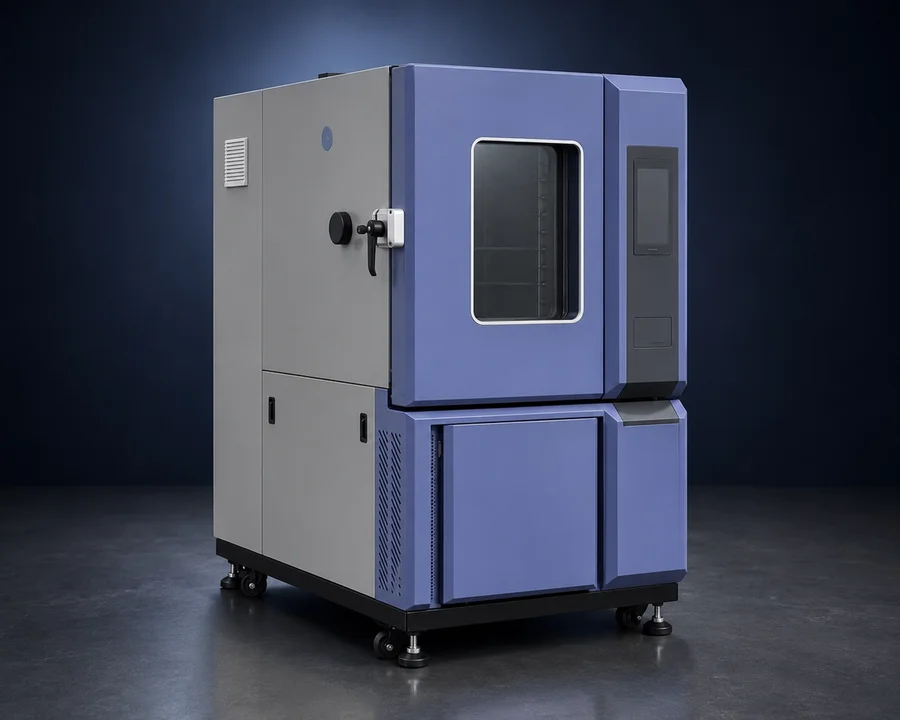
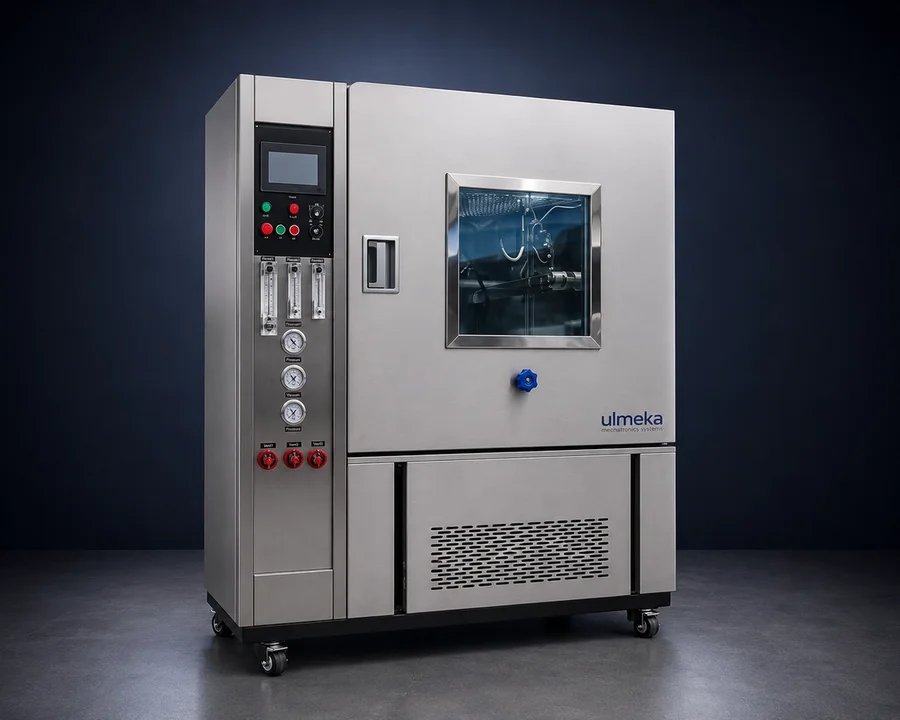
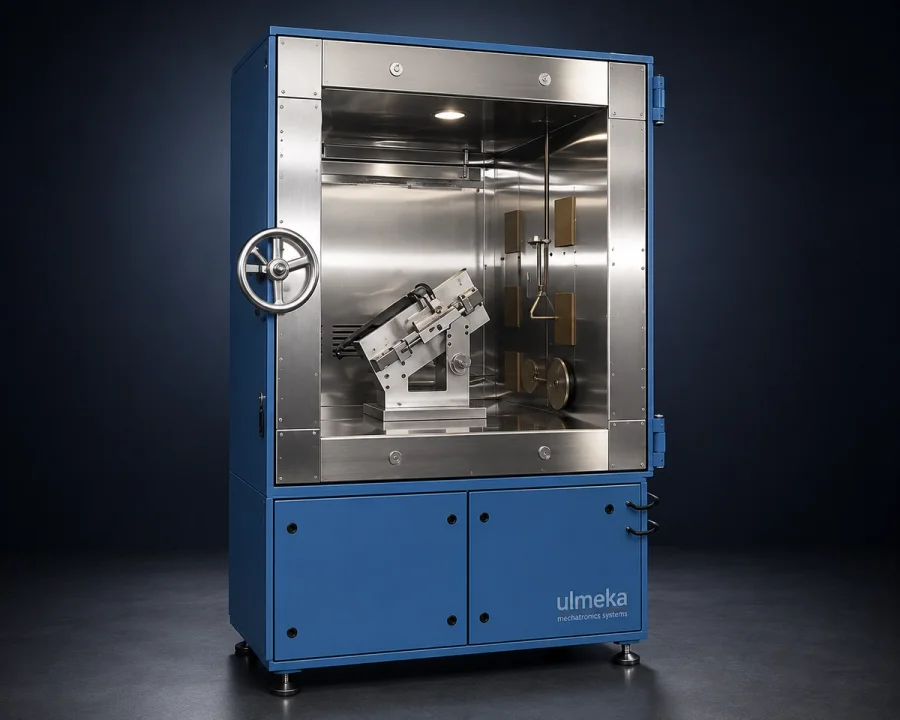
ULMEKA engineers test systems
to specification.
If your requirement is outside this catalogue — custom chamber sizes, combined-standard integration, or tailored test profiles — talk to our engineering team.